XRechnung vs ZUGFeRD vs PDF: which format to use in Germany
Official references
Use these sources to verify dates, formats, and official rule changes.
Related Technical Wiki
Explore deep-dive developer documentation and regulatory guidelines matching this article.
Learn which e-invoice formats are commonly used in Germany, how routing works, and which identifiers you need for compliant delivery.
How XRechnung applies EN 16931 in Germany, including XML syntax, validation, buyer references, and delivery channels.
ZUGFeRD and Factur-X hybrid invoices: PDF/A-3 with embedded CII/XML, profile levels (MINIMUM to EXTENDED), validation, and when to choose ZUGFeRD vs pure XML for Germany and EU B2B.
A practical decision guide for choosing XRechnung, ZUGFeRD/Factur-X, or another EN 16931 output before conversion.
Compare Invoice-Converter.com with alternatives for XRechnung and ZUGFeRD workflows.
This guide helps businesses invoicing German customers choose a format that the recipient and delivery channel can process.
As of April 20, 2026, businesses in Germany must be able to receive structured e-invoices for domestic B2B transactions. Issuers can still use the statutory transition rules, so 2026 is the time to decide which structured formats you can actually produce, validate, and support in day-to-day operations.
First answer: what counts as an e-invoice in Germany
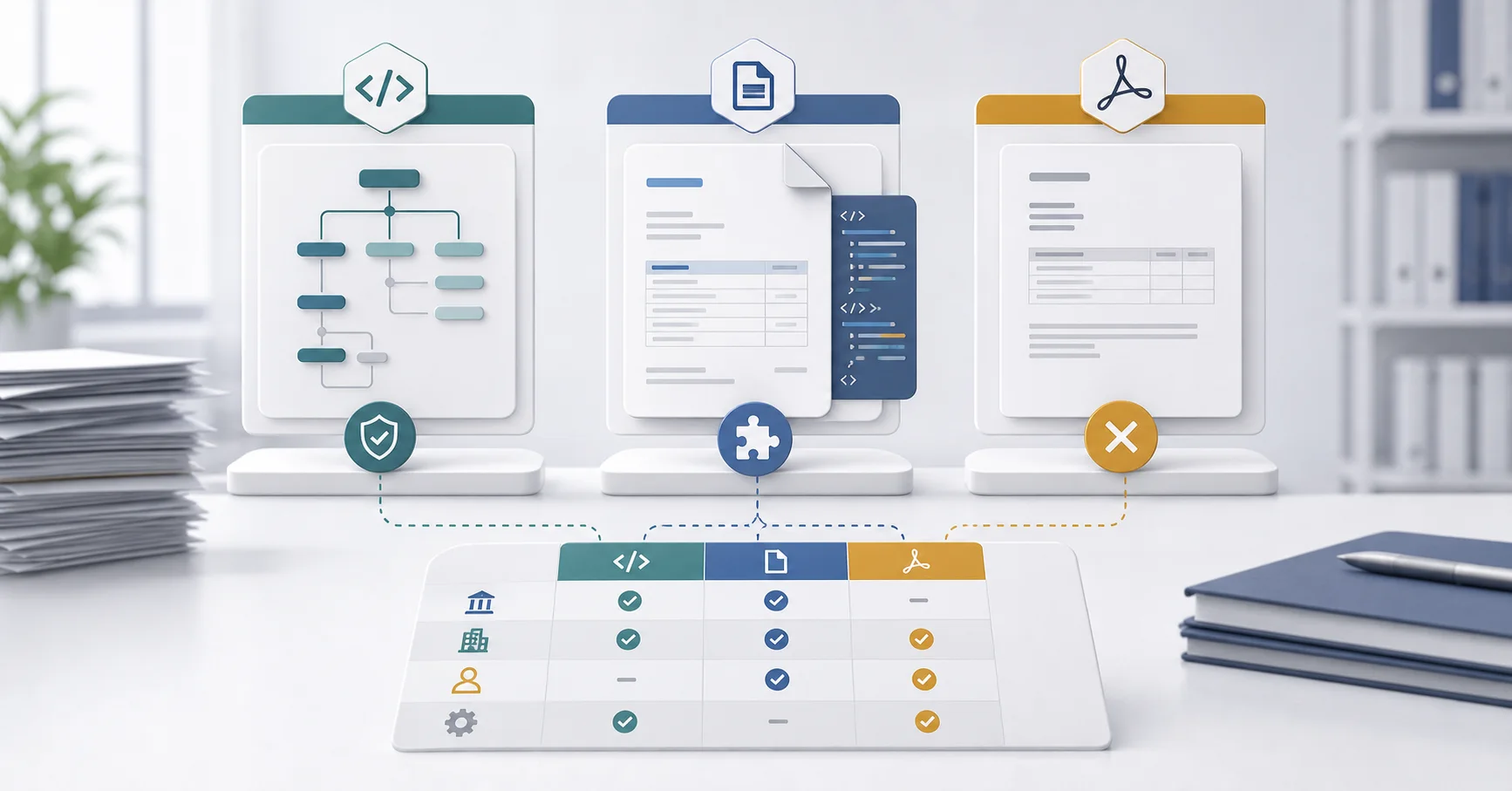
The German BMF FAQ defines an e-invoice as a structured electronic format that enables electronic processing and complies with EN 16931 or is interoperable with it. A plain PDF is still an electronic document, but since January 1, 2025 it is classified as a “non-e-invoice” (sonstige Rechnung), not as a structured e-invoice.
That is why the practical question is not "Can I email a PDF?" but "Can my process generate structured invoice data that the recipient can process and a validator can check?"
The formats most teams should care about
- XRechnung: a German EN 16931 CIUS supplied as UBL or CII XML. Use it when the recipient or portal requires XRechnung, and confirm which syntax and routing fields it accepts.
- ZUGFeRD / Factur-X: a PDF/A-3 file with embedded CII XML. Use a profile the recipient accepts; MINIMUM and BASIC WL do not qualify as German e-invoices under the BMF rules.
- UBL and CII: XML syntaxes, not substitutes for the recipient profile. XRechnung supports both; ZUGFeRD / Factur-X uses CII. A Peppol channel can require Peppol BIS Billing in UBL.
How to choose the right format
- Start with the recipient requirement, not your preferred format. Some recipients or channels are explicit.
- Choose XRechnung when the recipient or delivery channel requires it; then confirm its accepted UBL or CII syntax and buyer reference.
- Choose ZUGFeRD when the recipient accepts the chosen profile and a readable PDF is useful alongside structured data.
- For Peppol, follow the required Peppol BIS Billing profile and endpoint rules rather than sending generic UBL.
- Validate the output with the relevant rule set before you decide the format is ready for production.
What does not solve the problem on its own
- Sending a standard PDF and assuming it has become compliant because it was created electronically.
- Picking one format globally without checking the recipient channel or buyer requirement.
- Manually editing XML after validation failures instead of fixing the source data or mapping logic.
- Skipping a review step for invoices with weak source quality, discounts, mixed VAT treatments, or missing buyer identifiers.
Official baseline for Germany
Use the BMF FAQ on Germany’s mandatory e-invoicing rules from January 1, 2025 as the legal baseline for domestic B2B invoicing. For practical rollout, pair that legal view with your recipient requirements, validator output, and internal exception process.
Ready to convert your invoices?
Start converting PDF invoices to XRechnung, ZUGFeRD, and other formats today with credits or a paid plan.