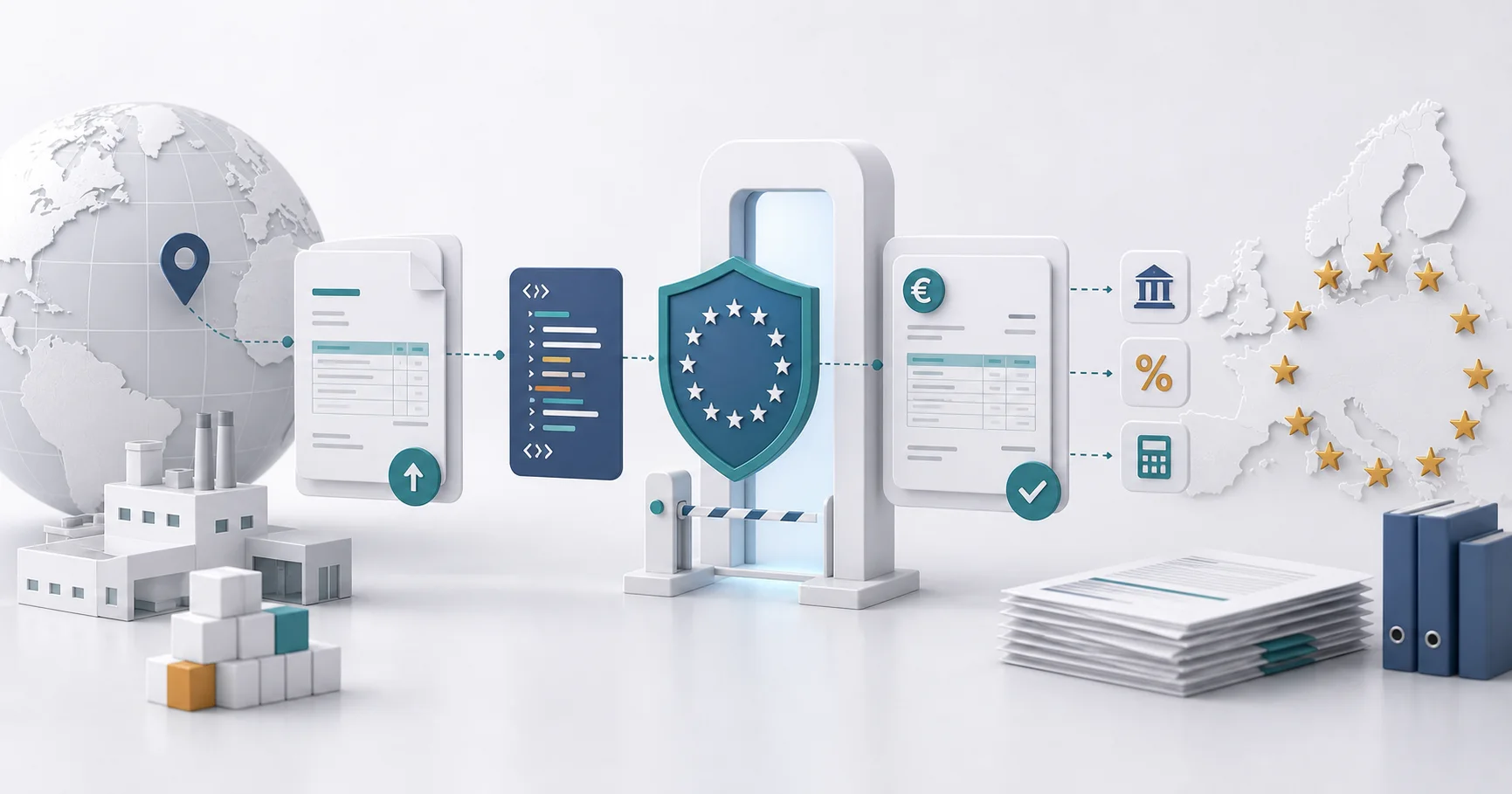
Italy SDI & FatturaPA E-Invoicing: Schema, Codice Destinatario & B2B Compliance
Official references
Use these sources to verify dates, formats, and official rule changes.
Related Technical Wiki
Explore deep-dive developer documentation and regulatory guidelines matching this article.
Learn which e-invoice formats are commonly used in Italy, how routing works, and which identifiers you need for compliant delivery.
A country-by-country implementation guide for the largest and most mature EU e-invoicing markets: formats, routing, identifiers, pitfalls, and testing.
What to check before turning ERP, PDF, or spreadsheet invoice facts into structured XML.
Italy introduced mandatory electronic invoicing for most transactions between residents and businesses established in Italy on January 1, 2019. Invoices are exchanged through the Sistema di Interscambio (SDI), the tax authority’s delivery and validation platform.
For finance, ERP, and tax teams operating in Italy or billing Italian customers, compliance means generating XML that follows the official FatturaPA schema, checking the required tax data, and sending the file to SDI with the recipient’s Codice Destinatario or PEC details.
Key Architecture: How Italy’s SDI Works
- Centralized exchange: In-scope domestic electronic invoices must pass through the Agenzia delle Entrate’s Sistema di Interscambio (SDI). A PDF or other copy sent directly to the buyer does not replace the XML invoice delivered through SDI.
- FatturaPA XML Format: Invoices must adhere to the XML Schema FatturaPA (current version 1.2.x), containing buyer/seller tax IDs, line item breakdowns, and specific tax category codes.
- Routing identifiers: The recipient’s electronic address is either a 7-character Codice Destinatario or a certified email address (PEC, Posta Elettronica Certificata). If no address is provided, the issuer uses 0000000 and SDI makes the invoice available in the recipient’s reserved tax portal.
- Cross-border reporting: The separate periodic Esterometro filing ended on 1 July 2022. For in-scope cross-border transactions, reporting continues through invoice XML sent to SDI for each transaction; exceptions apply. FatturaPA document types such as TD17, TD18, and TD19 identify common purchase and reverse-charge scenarios.
FatturaPA XML Requirements & Document Types
The FatturaPA format supports various transaction scenarios using standardized document types (TipoDocumento). Common codes include TD01 (Standard Invoice), TD02 (Advance/Prepayment), TD04 (Credit Note), and TD24 (Deferred Invoice).
Each XML invoice needs the applicable Italian VAT number (Partita IVA) or tax code (Codice Fiscale), the correct Natura code for non-taxable or reverse-charge items, and the other mandatory fields for the transaction. A digital signature is not a general requirement for ordinary invoices sent through SDI, although special channels or document types may have additional rules.
SDI Delivery Rules & Status Notifications
- Transmission: Invoices are submitted to SDI via web service API, SFTP, PEC, or the Agenzia delle Entrate web portal.
- Validation: SDI checks the XML structure and required data, then sends a Notifica di Scarto when the file fails its controls. Checks and delivery can take up to five days during periods of high volume.
- Delivery: If validation succeeds, SDI sends the invoice to the electronic address in the file and returns a Ricevuta di Consegna. If delivery is not possible, the invoice remains available in the recipient’s reserved area and the issuer must notify the recipient.
- Preservation: Both issuer and recipient must keep electronic invoices using a legally compliant digital-preservation process (conservazione elettronica a norma). The required retention period depends on the applicable Italian tax and accounting rules.
Official References & Guidance
Ready to convert your invoices?
Convert PDF invoices to XRechnung, ZUGFeRD, and other formats. Subscriptions from €10/month with annual billing (excl. taxes), with a 3-day trial on your first subscription. Or without a subscription: €5 per conversion (excl. taxes).