Belgium B2B e-invoicing in 2026: scope, Peppol, and penalties
Official references
Use these sources to verify dates, formats, and official rule changes.
Related Technical Wiki
Explore deep-dive developer documentation and regulatory guidelines matching this article.
Learn which e-invoice formats are commonly used in Belgium, how routing works, and which identifiers you need for compliant delivery.
How Peppol exchanges structured invoices through access points, and which BIS, recipient, and national checks still apply.
A practical PEPPOL guide for invoicing teams: 4-corner model, endpoint discovery, profiles, code lists, and common validation issues.
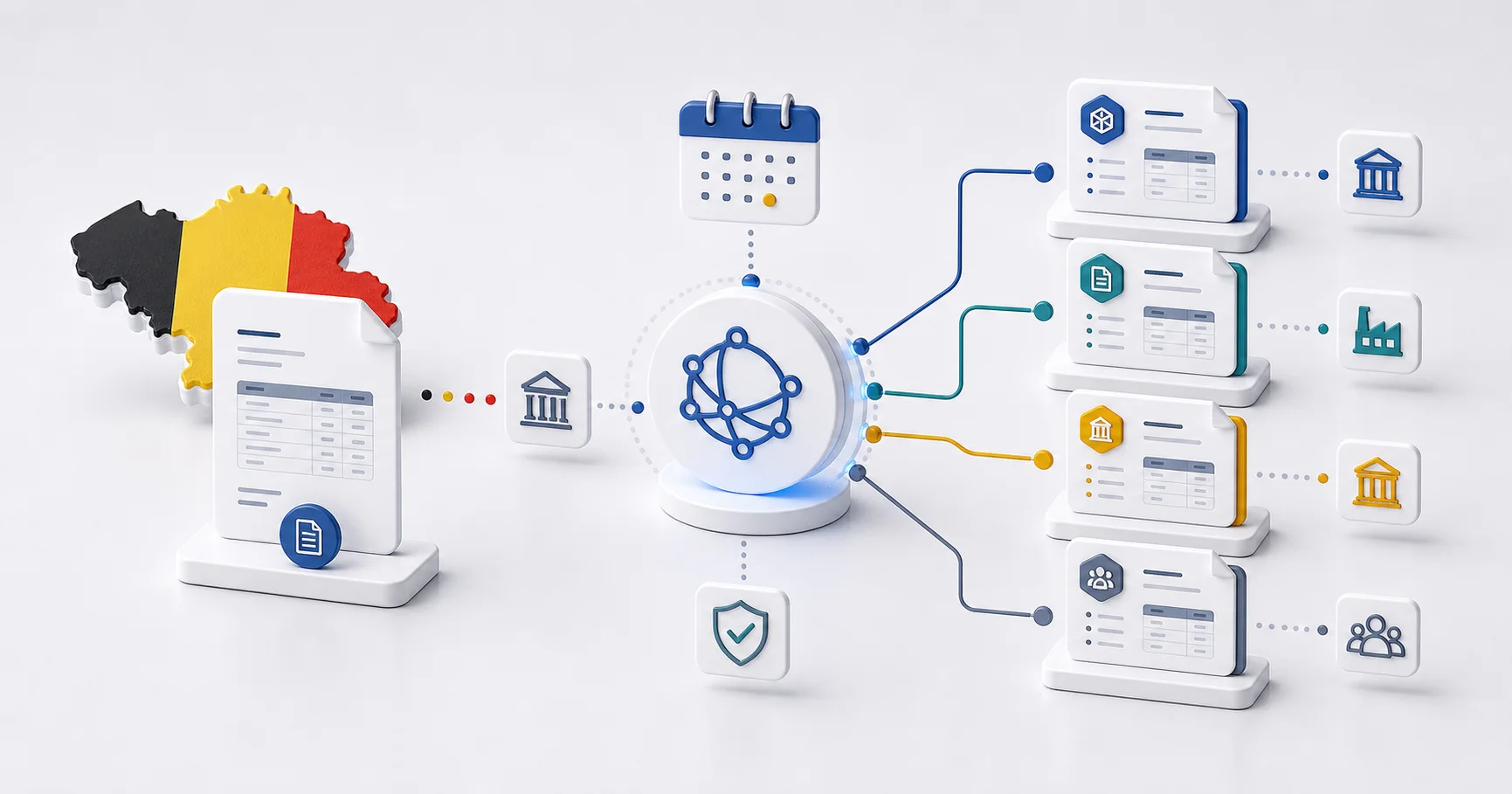
Since 1 January 2026, most domestic B2B invoices between Belgian businesses subject to VAT must be structured electronic invoices. A PDF by email is not a structured electronic invoice.
Do not translate “most covered transactions” into “every business and every invoice.” B2C invoices and several excluded or exempt situations need separate treatment. Use the official Belgian scope tool when the status of either party is unclear.
Format and delivery
Peppol BIS Billing 3.0 is the default practical route. It uses structured UBL data based on EN 16931. The parties can use another permitted structured route when the Belgian conditions are met, so Peppol is not an accurate universal statement for every invoice.
A company needs software or a service provider that can both send and receive the required structured format. Confirm the recipient identifier before sending. Do not infer it from an email address.
What to prepare
- Confirm whether your Belgian entity and transaction are in scope.
- Activate receipt as well as sending; receipt capability is part of the obligation.
- Test tax categories, identifiers, credit notes, and accounting import with real examples.
- Keep a review route for incomplete source invoices and rejected messages.
Penalties: keep the €1,500, €3,000, and €5,000 amounts in scope
The specific fixed fines of €1,500 for a first offence, €3,000 for a second offence, and €5,000 for later offences apply to failure to have the technical means to issue and receive structured electronic invoices. A later offence is subject to the timing condition stated in the official FAQ.
These amounts are not the complete penalty table for every invoice error. Existing proportional and non-proportional VAT fines also remain available for failure to issue an invoice, late issue, missing mandatory data, inaccuracies, and other legal failures. Describe the concrete offence before quoting an amount.
A short operational check
- Check scope for the seller, buyer, and transaction.
- Confirm the structured format and delivery channel.
- Validate the invoice and compare key values with the approved source data.
- Send a test, confirm receipt, and document how rejected invoices are corrected.
Ready to convert your invoices?
Convert PDF invoices to XRechnung, ZUGFeRD, and other formats. Subscriptions from €10/month with annual billing (excl. taxes), with a 3-day trial on your first subscription. Or without a subscription: €5 per conversion (excl. taxes).
Testing works without an account, up to 6 PDF pages per conversion, attachments included. The download needs an account plus a credit or a subscription.